What Sets High-Quality Cosmetic Dentistry Apart?

Cosmetic dentistry sits at an unusual intersection of health care, design, engineering, and psychology. People often come in asking for whiter teeth or a straighter smile, but the real question is usually deeper. They want to look less tired. They want old dental work that no longer matches. They want to stop covering their mouth when they laugh. Sometimes they simply want their teeth to look like they belong to their face.
That is where the difference between average cosmetic work and high-quality cosmetic dentistry becomes obvious. The best results do not announce themselves from across the room. They look believable in daylight, in photographs, and in motion. They respect facial proportions, speech patterns, bite forces, gum health, and the age of the patient. They hold up over time. They feel comfortable. And just as important, they are planned with enough restraint to avoid the overdone look that people often fear.
A nice before-and-after photo can be persuasive, but it does not tell the whole story. High-quality cosmetic dentistry is defined less by flash and more by judgment. It is the sum of diagnostics, communication, craftsmanship, and ethics.
It starts with a diagnosis, not a sales pitch
The most reliable cosmetic cases begin with a careful exam, not a menu of treatments. A dentist who takes cosmetic work seriously wants to know how the teeth function before deciding how they should look. That means evaluating the bite, signs of grinding, wear patterns, gum levels, tooth position, jaw movement, old restorations, and often the quality of the enamel itself.
A patient might ask for veneers when orthodontic movement would preserve more tooth structure. Another might want whitening, but the real issue is that a dark front tooth has had prior trauma and needs a different solution. Someone else may dislike "crooked teeth" when the more significant problem is that the gum line is uneven, making otherwise healthy teeth look asymmetrical.
These distinctions matter. Cosmetic dentistry is not paint. It is not makeup for teeth. It changes hard tissue, soft tissue, or both, and every change carries consequences. A high-quality clinician knows when to proceed, when to stage treatment, and when to say no.
That last point is more important than many patients realize. Ethical restraint is one of the clearest markers of quality. If a patient with healthy enamel could be helped with whitening, enamel shaping, or orthodontics, an aggressive full set of crowns is not sophisticated treatment. It is overtreatment, no matter how glossy the photos look online.
Natural-looking esthetics are designed, not guessed
Many people can identify bad cosmetic dentistry immediately, even if they cannot explain why. The teeth may be too white, too flat, too uniform, or too bulky. They may reflect light unnaturally. The smile might dominate the face rather than support it.
Natural esthetics depend on dozens of subtle choices. Tooth length, width, translucency, surface texture, line angles, incisal embrasures, and color variation all influence whether the final result looks credible. Real teeth are not blank white tiles. Even very bright, youthful teeth have character. The edges transmit light differently than the body of the tooth. The canines are often slightly richer in color. Tiny asymmetries can make a smile feel alive rather than manufactured.
This is why high-quality cosmetic dentistry often looks less dramatic up close in the lab and more impressive in real life. The goal is harmony. A beautiful smile should fit the skin tone, lip posture, age, and face shape of the patient. Cosmetic Dentistry A 28-year-old television presenter and a 62-year-old executive may both want a refreshed smile, but the design language should not be identical. One of the fastest ways to create an unnatural result is to apply the same template to every patient.
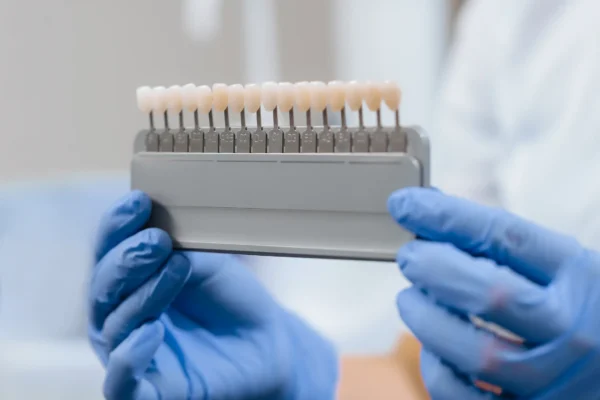
Dentists who do excellent esthetic work tend to spend a surprising amount of time studying photographs, facial movement, and provisional restorations. They often have long conversations with patients about what "natural" means to them. For one person it means very bright but believable. For another it means keeping a slightly imperfect feature that feels familiar. Those nuances cannot be extracted from a shade guide alone.
Materials matter, but only in skilled hands
Patients hear a lot about porcelain, zirconia, composite, and modern bonding systems. These materials do matter. They influence strength, translucency, stain resistance, repairability, and how conservatively the dentist can work. But materials alone do not create quality. A premium ceramic used poorly will still produce a poor result.
Porcelain veneers, for example, can be extraordinarily refined when case selection is appropriate and preparation is conservative. They can also look chalky, bulky, and opaque if too much tooth reduction is done or if the ceramist has incomplete information. Composite bonding can be elegant, economical, and minimally invasive in the right hands. It can also discolor quickly or chip if the bite is not respected or finishing is rushed.
The best cosmetic dentists do not simply choose the most expensive material. They choose the most appropriate one for that tooth, that bite, that patient, and that budget. In practice, this often means discussing trade-offs honestly. Composite may preserve more enamel and be easier to repair, but porcelain usually holds polish better over many years. A no-prep veneer sounds appealing, but if the tooth already projects outward, adding thickness may create a bulky result. Zirconia may be durable in posterior areas, but durability is not the only criterion when the front teeth are in the aesthetic zone.
Quality lies in matching the material to the biology and the design objective, then executing the details precisely.
The lab partnership is often the hidden difference
Patients naturally focus on the dentist, yet some of the finest cosmetic outcomes depend on a close relationship between dentist and laboratory technician. That collaboration is one of the least visible and most decisive factors in cosmetic dentistry.
A strong lab prescription is not a vague note saying "make it look nice." It includes photographs, shade information, stump shade when relevant, notes about texture and translucency, bite records, and a clear design concept. In more complex cases, the ceramist may review digital scans, diagnostic wax-ups, or provisional shapes to understand exactly how the final restorations should function and appear.
When this communication is weak, the restorations may fit technically but still miss the mark esthetically. The shape may be generic. The brightness may not match adjacent teeth. The midline may drift. The patient may struggle to articulate why the result feels "off" even though nothing appears obviously wrong.
Experienced cosmetic dentists respect their lab partners because they understand how much artistry sits inside a millimeter of ceramic. Margins, contours, internal characterization, and texture all affect the final result. High-quality cosmetic dentistry is rarely a solo act.
Preparation should be conservative whenever possible
One of the biggest misconceptions in cosmetic dentistry is that dramatic change always requires aggressive preparation. Sometimes substantial alteration is necessary, especially when replacing old crowns, correcting severe discoloration, or managing broken down teeth. But in many cases, better planning allows the dentist to preserve far more natural structure than patients expect.
Enamel is precious. Bonding to enamel is generally more predictable than bonding deep into dentin. Teeth that are minimally altered often remain stronger and more biologically stable over time. That is why experienced dentists think carefully about sequencing. Moving teeth first with orthodontics can reduce the amount of drilling needed later. Whitening before restorative work may allow for thinner veneers or fewer restorations. Small gum adjustments may solve a proportion problem that would otherwise be "fixed" by making teeth too long.
A useful way to judge quality is to ask whether the plan preserves options for the future. Dentistry is cumulative. A patient in their thirties may need maintenance, repair, or replacement decades later. A conservative treatment plan respects that reality. It aims to improve the smile now without creating unnecessary biological costs later.
Fit, bite, and gum response separate pretty work from durable work
There is a short honeymoon period in cosmetic dentistry where many cases look acceptable. The photos are fresh, the patient is excited, and everything appears smooth. Then real life begins. The patient chews, speaks, sips coffee, clenches at night, and returns for review months later. This is where quality reveals itself.
Restorations that are slightly overcontoured can inflame the gums. Margins that are not well adapted can trap plaque and show dark lines over time. Contacts that are too loose may allow food impaction. A bite that is off by even a small amount can make veneers chip or leave a patient saying, "It just doesn't feel right." These are not cosmetic details in the superficial sense. They are foundational.
Excellent cosmetic work should disappear into normal function. The patient should be able to close comfortably, pronounce words clearly, floss without shredding, and smile without self-consciousness. The gums should settle into a healthy architecture around the restorations. If the tissue looks puffy months later, something deserves another look.
This is one reason same-day enthusiasm should be balanced with follow-up. High-quality cosmetic dentists usually build review into the process. They expect to refine, polish, and evaluate tissue response. They know that a smile is not fully judged the hour it is delivered.
The mock-up and provisional phase are where many great cases are won
When larger cosmetic changes are planned, provisional restorations or mock-ups can be invaluable. They allow the patient and the clinician to test shape, length, phonetics, and lip support before finalizing the definitive work. This step may feel slow to someone eager for a quick transformation, but it often prevents expensive disappointment.
A patient may initially request longer front teeth because they look youthful in photos. Once the provisionals are in place, they may notice speech changes on certain sounds or feel that the teeth show too prominently at rest. Another patient may think they want ultra-straight uniform edges, then realize they prefer a softer, more natural contour after living with a trial smile for a week.
These insights are difficult to gain from imagination alone. Faces move. Lips animate. Teeth show differently in static portraits than they do in conversation. Provisionals translate abstract preferences into a real test drive. In high-end cosmetic cases, that trial phase is often what allows the final result to feel personal rather than generic.
Good cosmetic dentistry includes honest conversations about maintenance
A common sign of mediocre cosmetic dentistry is the implication that treatment is a permanent finish line. It is not. Everything in the mouth exists in a wet, high-force, bacteria-rich environment. Even excellent dentistry ages.
That does not mean patients should feel pessimistic. Well-planned cosmetic work can last many years and sometimes much longer, but longevity depends on habits, biology, and maintenance. Someone who grinds heavily may need a night guard. A patient with dry mouth has higher risk around margins and natural teeth. Composite bonding may require periodic polishing or touch-ups. Whitening usually needs refreshing. Veneers can last a long time, but they are not indestructible.
A trustworthy cosmetic dentist explains this in practical terms. They discuss likely maintenance, not to weaken enthusiasm, but to set realistic expectations. Patients handle upkeep well when they know what they are signing up for. They resent surprises.
Here are a few signs that a cosmetic treatment plan is being presented responsibly:
- The dentist explains alternatives, including simpler or more conservative options.
- The expected lifespan is discussed as a range, not a guarantee.
- Maintenance needs, such as night guards or polish visits, are mentioned clearly.
- Limits are acknowledged, especially if bite issues, staining habits, or gum conditions affect results.
- The patient is shown what can be improved and what cannot be perfected.
Notice how little of that has to do with marketing language. It is mostly clarity and honesty.
Photography and records are not vanity, they are quality control
In cosmetic dentistry, records are not just for the website gallery. Good clinical photography is a working tool. It helps the dentist analyze symmetry, tooth display, gum levels, shade, smile arc, and facial integration. It also improves communication with the laboratory and gives the patient a more accurate sense of what is changing.
Without records, treatment planning becomes more subjective than it should be. Small asymmetries are easy to miss in the chair. Shade decisions made under inconsistent lighting can lead to frustration. A patient may remember their pre-treatment smile differently than it actually was. Photos and digital scans create a reference point that supports better decisions.
This detail may sound technical, but it often marks the difference between casual cosmetic work and serious cosmetic work. The clinicians who document thoroughly tend to plan thoroughly. They are less likely to wing it, and cosmetic dentistry should never be improvised.
Experience shows in the small moments
Patients often assume expertise is revealed by a dramatic reveal at the end. More often, it appears in less theatrical ways. It appears when the dentist notices that one lateral incisor should stay a touch narrower because widening it would flatten the smile. It appears when they advise delaying final shade selection until after whitening stabilizes. It appears when they rework a provisional because the lip support is slightly overdone, even though the patient cannot yet identify what feels different.
I have seen cases where two plans looked similar on paper and had very different outcomes in reality. In one, the clinician prepared aggressively to create instant alignment, leaving a result that looked bright but a bit thick, with gums that never fully loved the contours. In the other, a few months of orthodontic movement allowed conservative veneers with cleaner emergence profiles and healthier tissue. Both cases would have looked impressive on social media the day they were seated. Only one was likely to age gracefully.
That is the recurring lesson in cosmetic dentistry. Quality often hides in restraint, sequencing, and detail.
Cost and value are related, but they are not identical
High-quality cosmetic dentistry is rarely cheap, and there are good reasons for that. Time, laboratory work, records, provisionals, high-end materials, and post-delivery care all carry real costs. However, high fees alone do not prove quality. Nor do low fees always mean poor work in every circumstance.
Patients evaluating cosmetic treatment should think in terms of value rather than headline price. A lower-cost case that needs revision within a short period can become far more expensive than a carefully planned original treatment. On the other hand, not every patient needs a comprehensive, premium-priced smile makeover. Sometimes a modest treatment, done thoughtfully, creates the best result.
This is where judgment again matters. A dentist who can scale treatment appropriately, rather than upselling every concern into a major case, often delivers better long-term value. Cosmetic dentistry should be tailored, not standardized around the highest possible fee.
What patients should pay attention to before saying yes
For someone considering cosmetic dentistry, the challenge is knowing what to evaluate before treatment starts. Credentials, before-and-after photos, and online reviews are useful, but they are incomplete. The consultation itself usually tells you more.
Pay attention to whether the dentist listens carefully to your concerns or redirects immediately toward a predetermined solution. Notice whether they study your face and bite or focus only on tooth color. Ask what alternatives exist, what the trade-offs are, and how much natural tooth structure would be removed. If the answer to every question is effortless perfection, be cautious. Skilled clinicians are confident, but they are rarely simplistic.
A useful set of questions might include the following:
- What are the conservative options before we consider veneers or crowns?
- How will this affect my bite, speech, and long-term maintenance?
- Can I see cases similar to mine, not just dramatic smile makeovers?
- Will there be a mock-up or provisional phase for larger changes?
- What happens if I chip, stain, or need replacement years from now?
The quality of the answers often matters as much as the answers themselves. Specific, thoughtful responses usually reflect deeper clinical reasoning.
The best cosmetic dentistry respects the person, not just the smile
A technically excellent smile can still miss the mark if it does not fit the person wearing it. Some patients want subtle refinement. Others want a brighter, more camera-ready result. Neither preference is wrong. What matters is whether the final work reflects informed choices, sound biology, and careful execution.
High-quality cosmetic dentistry stands apart because it balances art with discipline. It pursues beauty without sacrificing health. It values materials, but not more than planning. It uses technology, but not as a substitute for judgment. It takes enough time to get the details right, then enough humility to maintain and refine the work after placement.
When cosmetic dentistry is done at a high level, people often struggle to identify what changed. They simply think the person looks healthier, more rested, more confident. That subtlety is not an accident. It is the product of diagnosis, communication, technical skill, and restraint working together.
The most successful cosmetic cases do not chase an idealized smile from a template. They uncover the best version of the smile that already belongs to the patient.
Toothworks of Bakersfield, Dentist and Orthodontist
1030 H St #1, Bakersfield, CA 93304, United States
+1 661-323-9421
FAQ About Cosmetic Dentistry
Is bonding better than veneers?
Neither option is best for everyone. Composite bonding can address small chips, gaps, or shape concerns and is generally easier to repair. Porcelain veneers may offer greater resistance to staining and wear, but often require removal of some enamel. A dentist should assess your oral health, bite, goals, and budget before recommending treatment.
How long will dental bonding last?
Bonding commonly lasts about three to ten years before it needs repair or replacement, though this varies with the location and amount of bonding, your bite, and daily habits. Regular dental visits, good oral hygiene, and avoiding chewing hard objects can help protect it. Ask your dentist what lifespan is realistic for your particular treatment.
What are the risks of teeth whitening?
Whitening can cause temporary tooth sensitivity and gum irritation. Overuse or incorrect use may damage teeth or gums, and whitening does not change the color of existing crowns, veneers, or fillings. Have a dentist assess your teeth and gums, and follow the recommended product directions and treatment schedule.